Encountering the Human: Ron Mueck at the Art Gallery of NSW
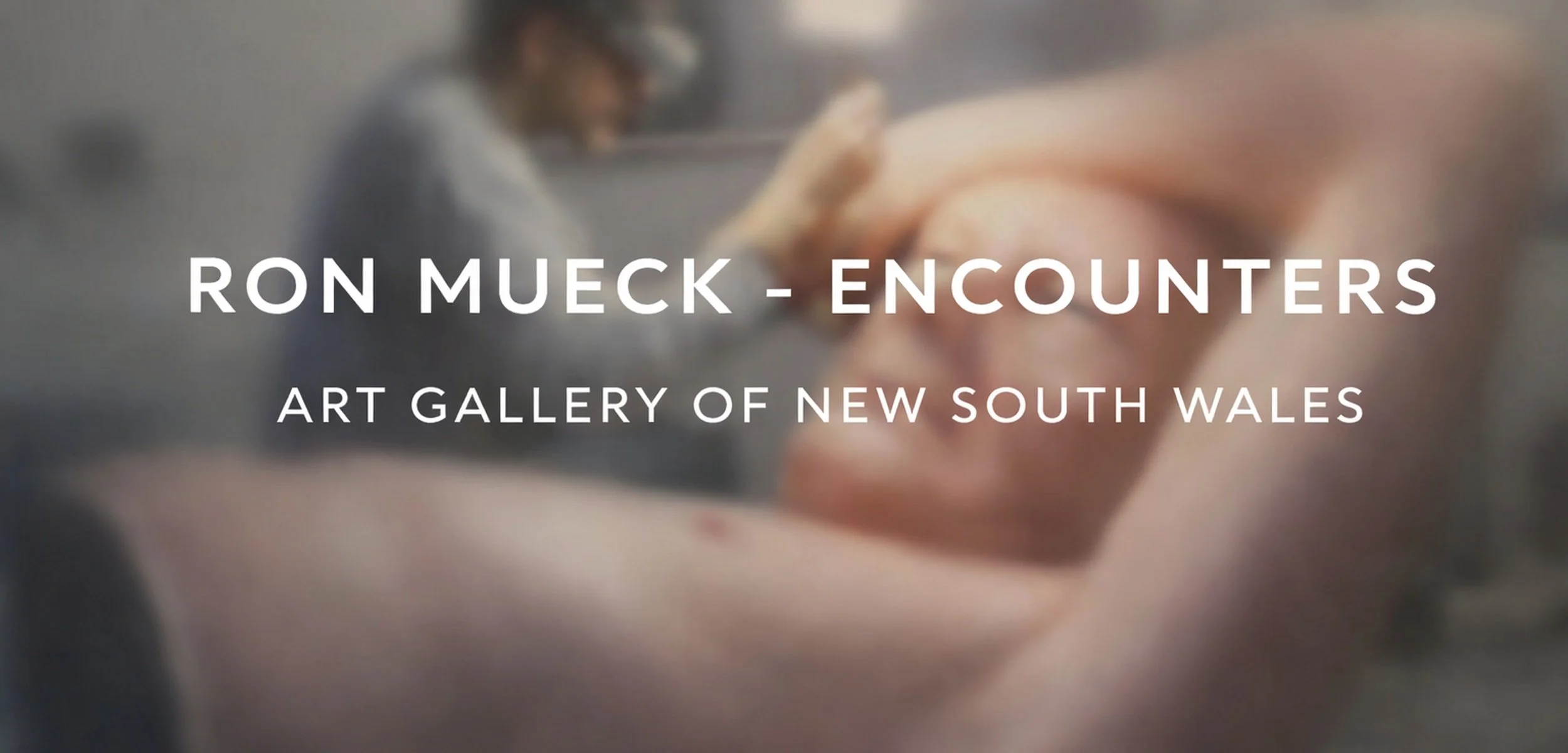
Today I experienced something rare. I encountered work that blurred the boundary between object and being.
It is not often that I am left completely in awe of an artist — whether visual, multimedia, sculptural, or immersive. Yet walking through Encounters at the Art Gallery of New South Wales, seeing the work of Australian sculptor Ron Mueck, I found myself profoundly moved.
The title of the exhibition — Encounters — is precise.
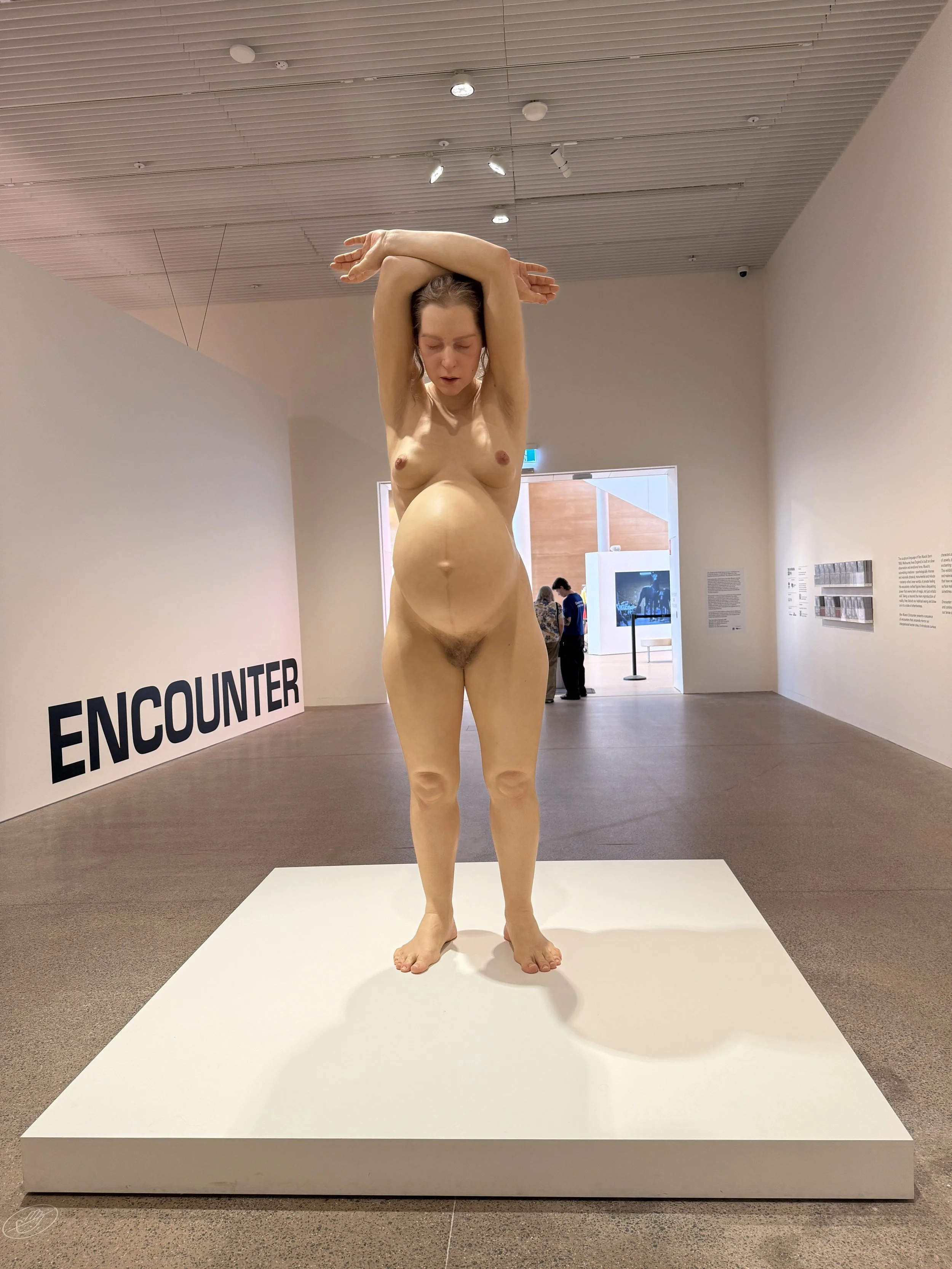
This is not a passive viewing experience. It is not simply an exhibition of objects. It is an encounter in the truest sense: a meeting between bodies in space. Between the viewer and the viewed. Between the living and the seemingly living.
There is something about sculpture that has always fascinated me. Unlike two-dimensional wall works, sculpture occupies space as we do. It exists in our realm. You walk around it. You approach it. You retreat from it. You experience it from multiple angles, much like walking around a tree, wandering through a garden, or navigating a labyrinth. The act of viewing becomes physical. Embodied.
In that sense, sculpture feels sentient.
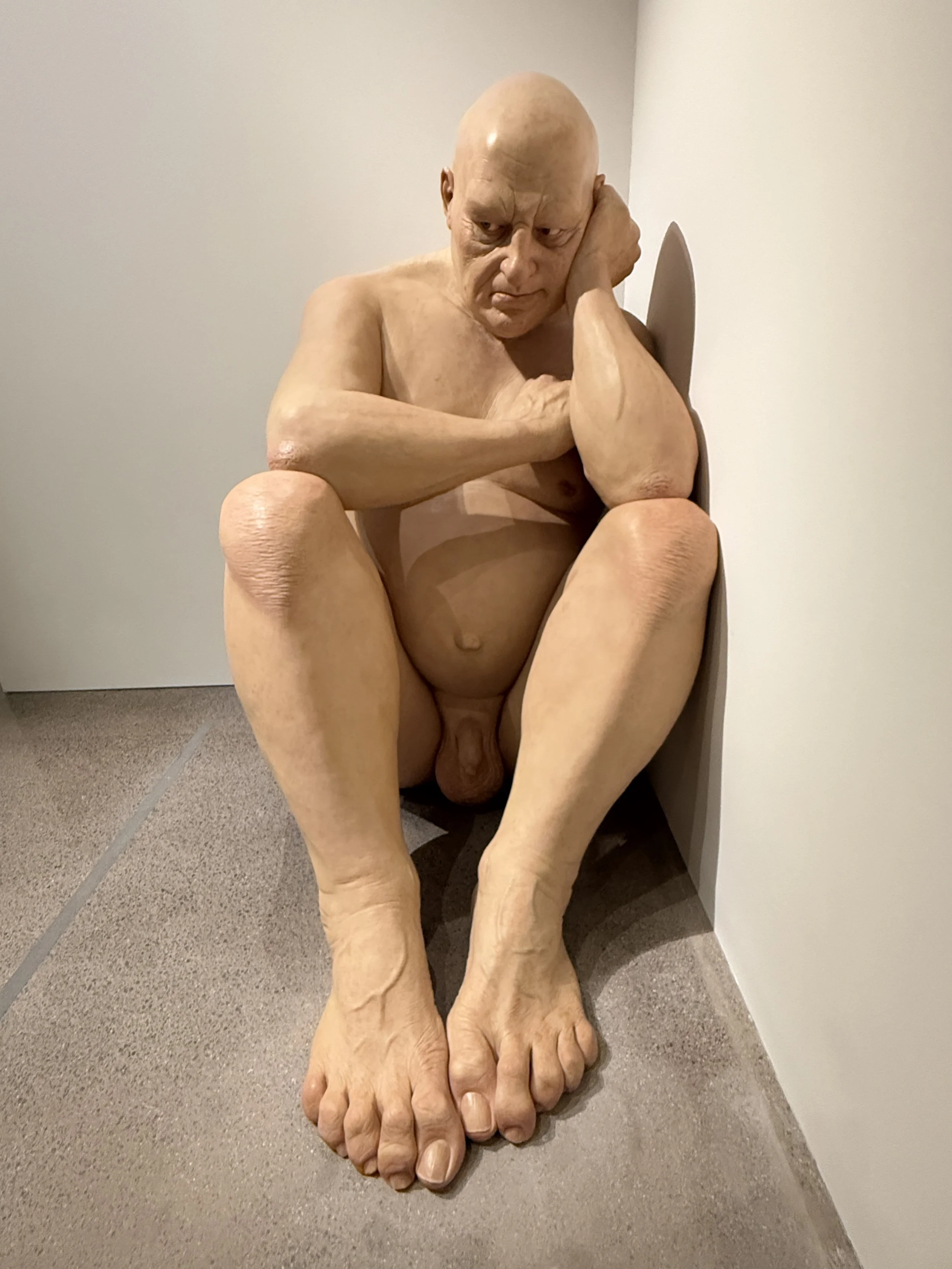
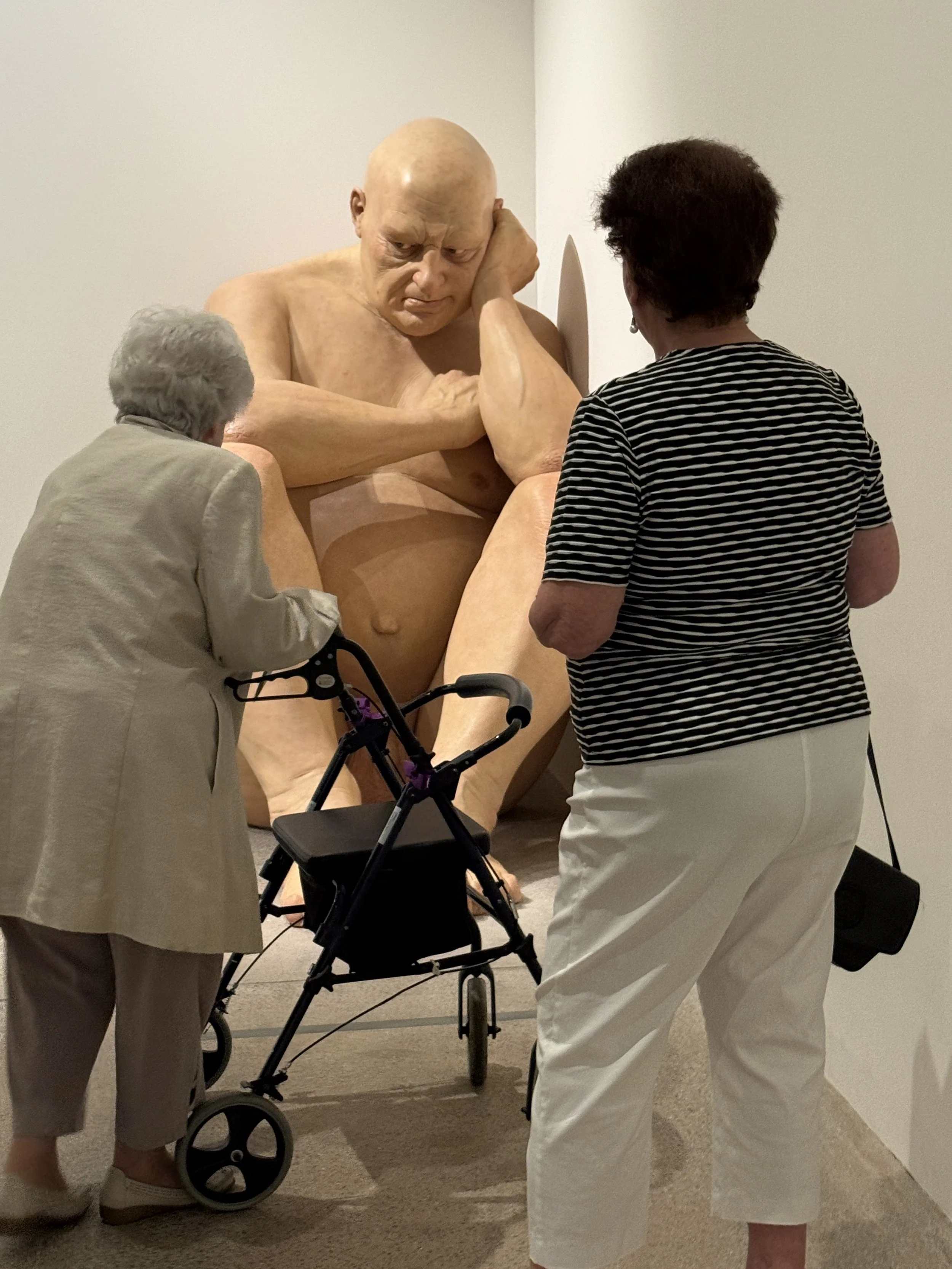
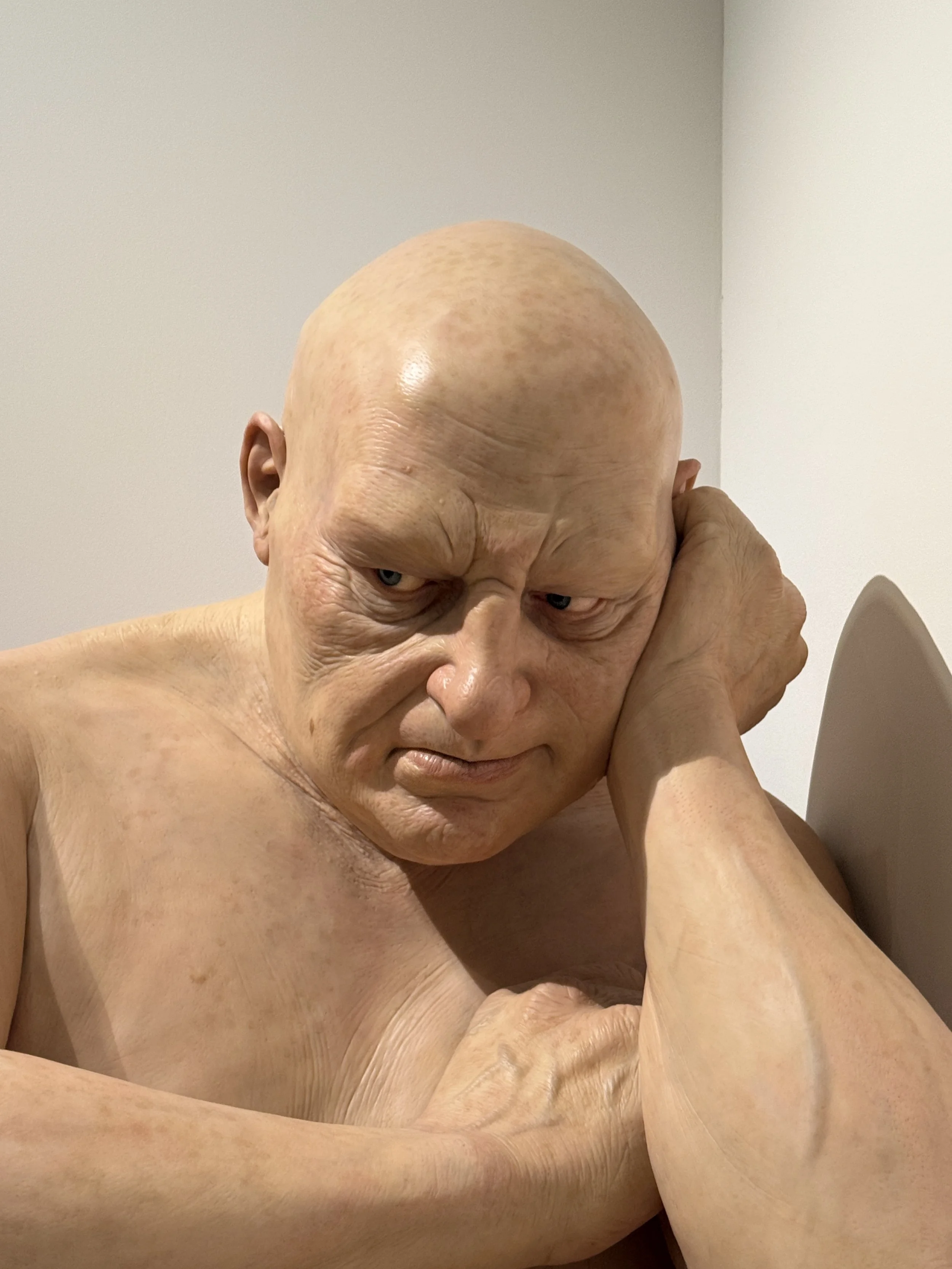
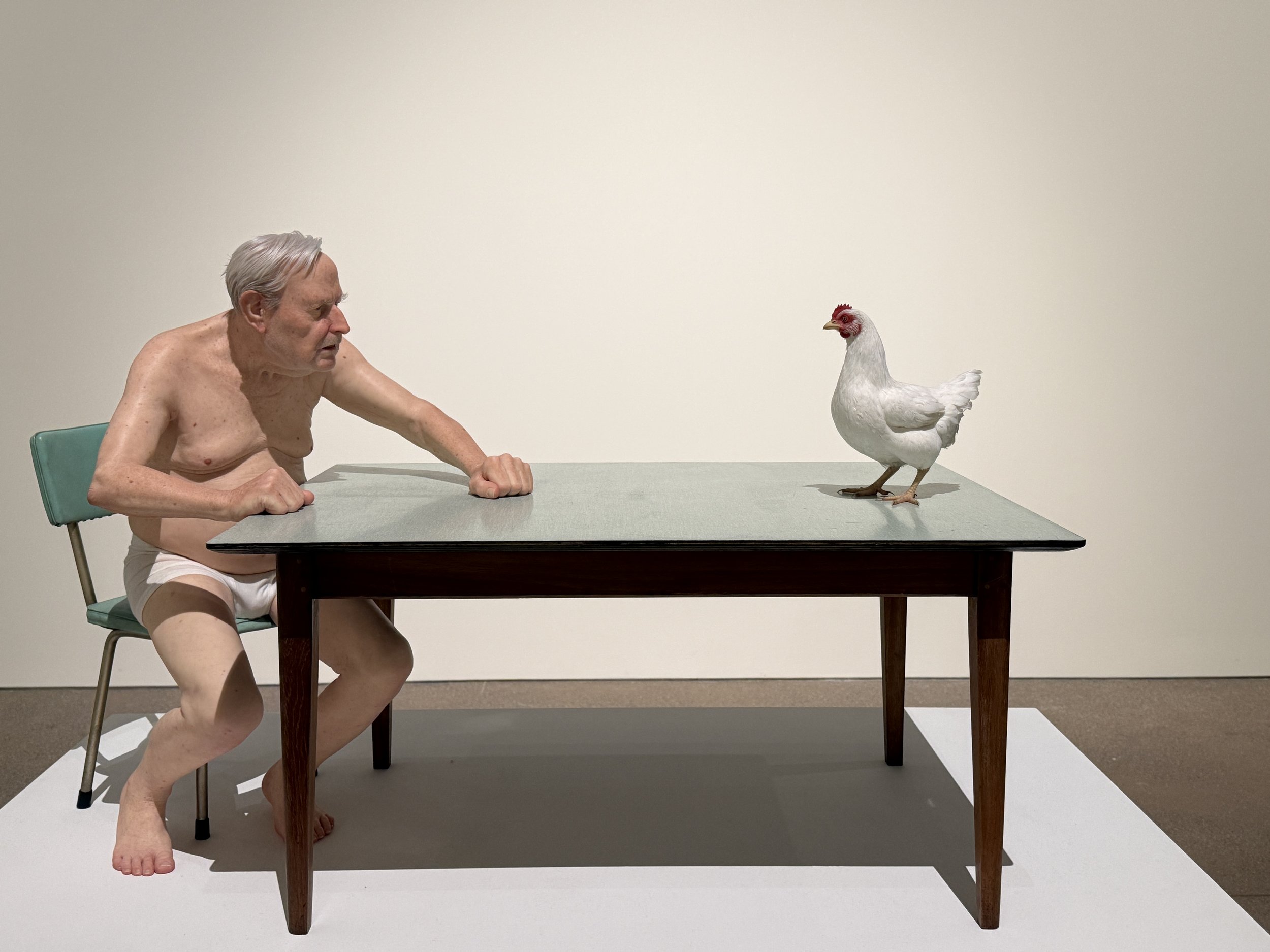
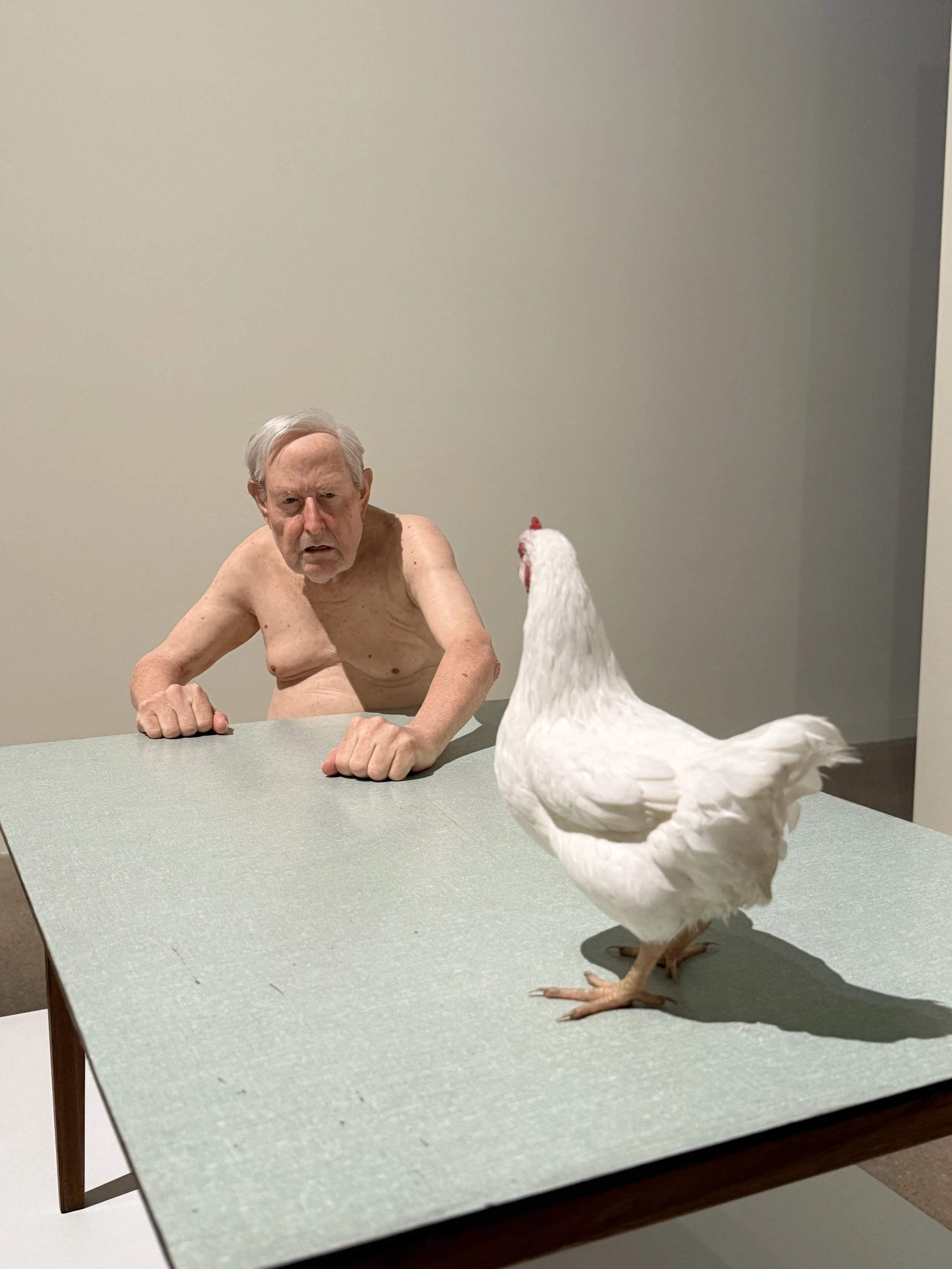
Mueck’s sculptures are entirely rooted in humanity — in the human figure, in human vulnerability, in the subtle language of the body. Standing before these works — whether monumental in scale or startlingly intimate — I felt something uncanny. They seem human. Possibly human. They appear as though they might breathe. They seem to stare back. Most of all, they radiate emotion.
To capture such emotional intensity in three-dimensional form is, to me, magical.
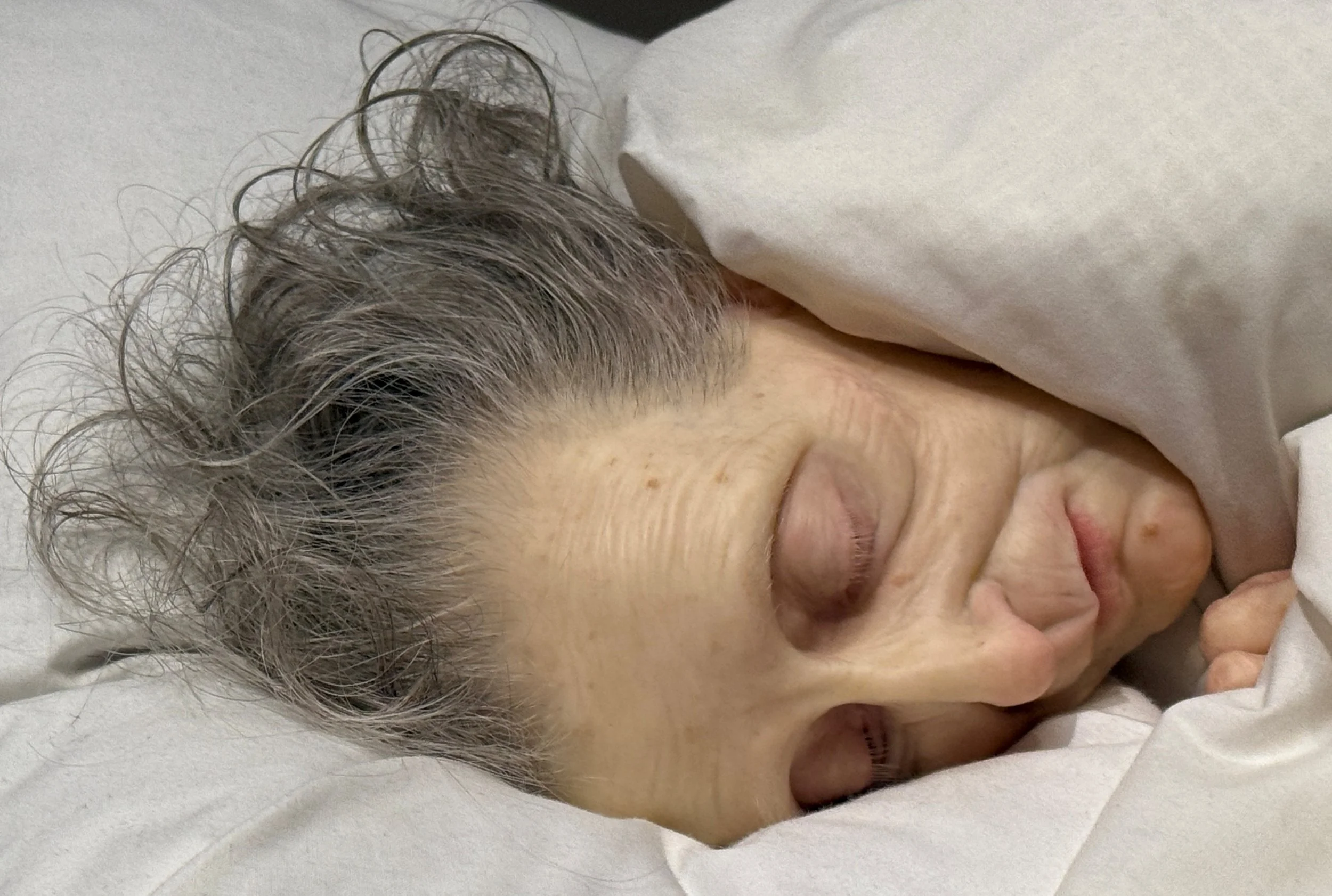
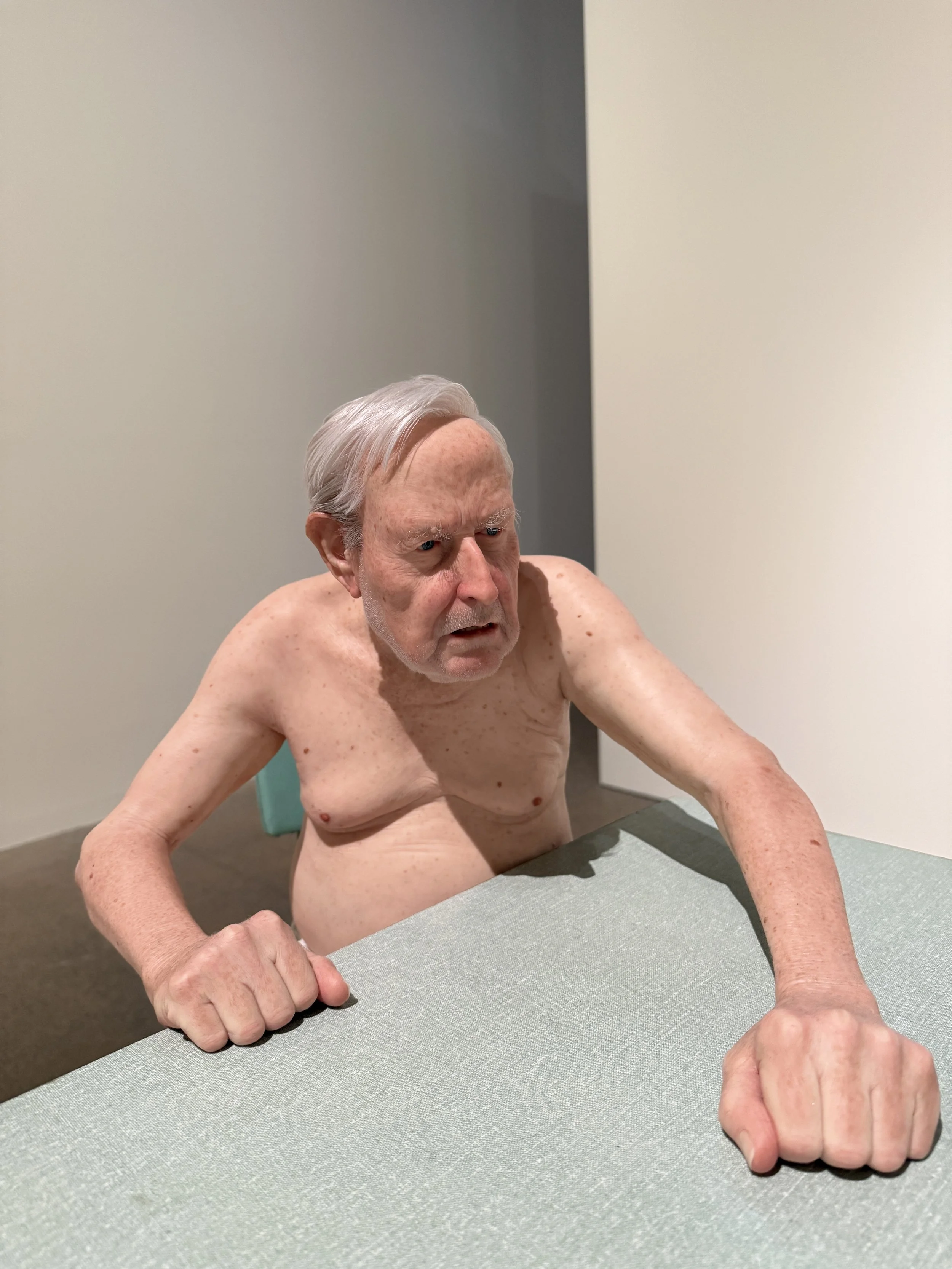
The attention to detail is extraordinary. Every toe, every wrinkle, every vein, every eyelid. Nothing is overlooked. It doesn’t matter whether the sculpture is colossal or miniature — the precision remains absolute. Yet it is not mere technical mastery that holds me. It is the presence.
These figures do not feel constructed. They feel formed.
I found myself wondering what it must be like inside Mueck’s mind while he works. How does such a figure take shape? It almost feels embryonic — as though from the smallest beginning, through time and attention, something gathers substance, structure, and finally, emotion. Not only does the body emerge, but the psyche seems to arrive fully formed.
This is where the exhibition connects deeply to my own ongoing inquiry into perception.
We make sense of the world primarily through vision. As Eric Kandel describes through the idea of unconscious inference, we are not passively recording reality; we are actively constructing it. The brain fills in gaps. It predicts. It projects. It completes.
Standing before Mueck’s sculptures, I became acutely aware of this process. I know intellectually that these are inert materials — silicone, resin, pigment. Yet my mind insists they are alive. My nervous system responds as if in the presence of another human being. I adjust my distance. I soften my gaze. I feel watched.
The encounter is psychological as much as physical.
What Mueck achieves is extraordinary because he activates this unconscious mechanism so completely. The sculptures sit on the threshold between object and being. They are not moving, yet they feel as though they could. They are silent, yet they carry internal narrative.
And this is where I felt the most profound connection to my own practice.
In my photographic work, I am also working with perception. With surface. With what appears and what is inferred. Water reflections, abstraction, pareidolia — these are all invitations for the viewer’s mind to complete what is not fully there. The image becomes alive not because of what I impose upon it, but because of what the viewer brings.
Mueck’s sculptures operate differently in medium, yet similarly in mechanism. He gives us the human form with such precision that our minds cannot resist completing the illusion of life. The beholder’s stake becomes everything.
The sculptures are not merely representations of people. They feel as though they contain lived experience. They hold silence, tension, introspection, vulnerability. And standing before them, I was not simply looking — I was being looked at.
That reciprocity is powerful.
Speaking with the gallery guides, it seems many visitors experience the works as “living.” The atmosphere shifts around them. Time slows. The room holds its breath.
For me, Ron Mueck stands as one of the most inspirational contemporary artists I have encountered. His practice is both monumental and intimate, technical and mysterious. It reveals how art and the mind converge — how material, imagination, observation, and emotional intelligence fuse into something iconic.
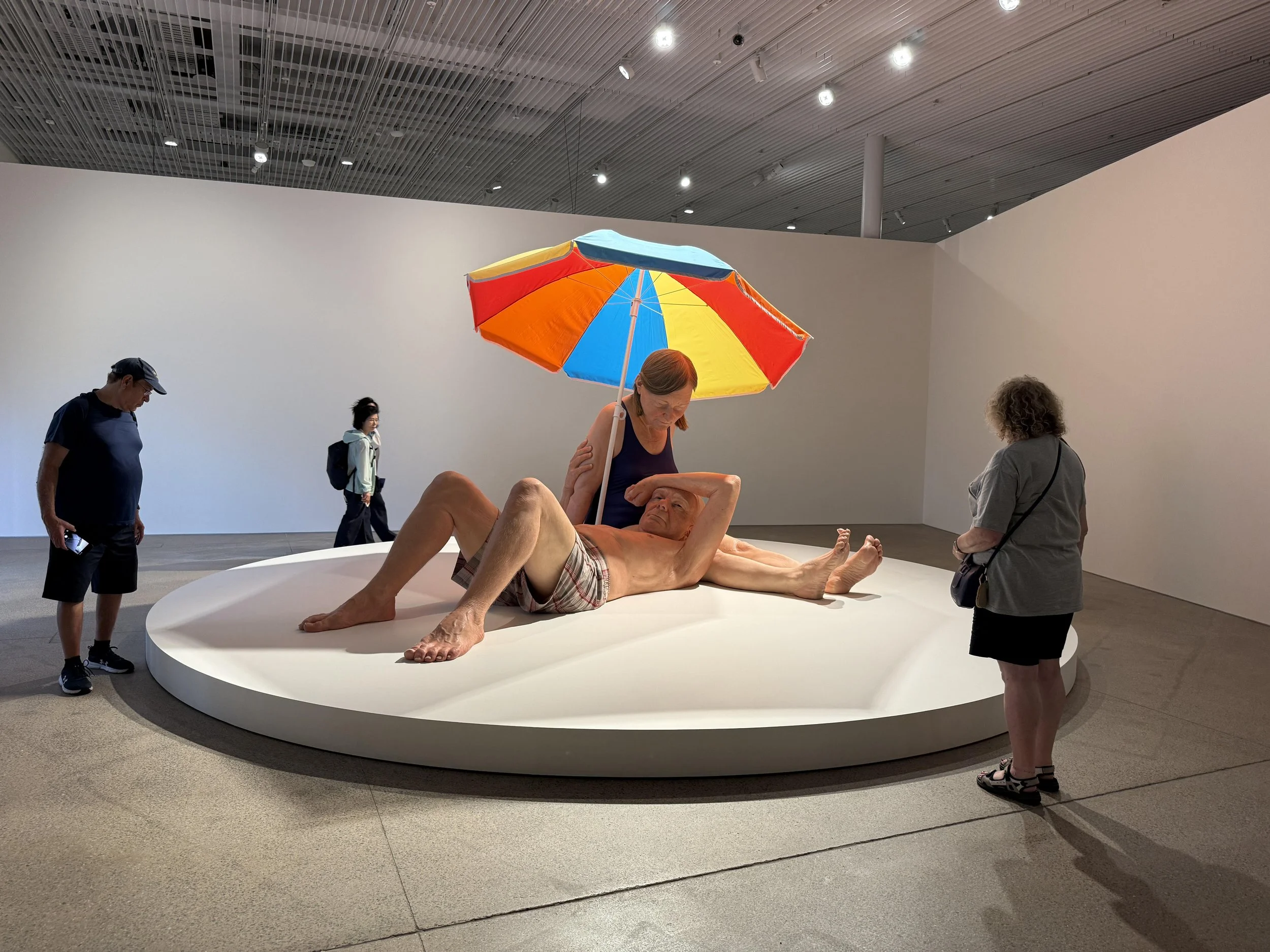
I know I will return to this exhibition.
Not simply to see the sculptures again, but to stand before them and feel that charged moment of encounter — that space where perception, emotion, and embodiment meet.
And perhaps, in that meeting, understand a little more about how art comes to life — and how we, as viewers, complete it.